All Categories
Featured
Table of Contents
To asses risk Waydev allows you to measure how most likely it is a specific devote will trigger problems. In this case, there are particular data points that you ought to consider, such as the commit's size, how far do the changes spread out, along with the changes' depth. Continuous Integration (CI) and Continous Development (CD) are essential in today's engineering environment because they guarantee that your team provides software in an iterative type.
Top Methods for Better IT Resource Allocation
Our service immediately gathers information from the Constant Integration and Continous Advancement pipelines and tracks Gitlab repos, enabling you to analyze info without requiring any kind of manual input. This is an exceptional method to keep track of DevOps performance by focusing on DORA metrics. By automating these procedures and measurements, you may have a clear view of how implementation is going, assess what impacts burn-down rates, what causes bottlenecks, and how to solve them.
This allows you to reallocate resources to deliver on time or optimize costs and interact job status to business leaders. When done right, the aligns company requirements with innovation procedures, making it possible for Engineering Managers to optimize performance and examine risks.
IT governance focuses on setting tactical instructions, policies, and oversight. IT management involves everyday operations, carrying out tasks, and administering systems and services. Secret stakeholders are executive leaders, IT supervisors, end users from company units, and procedure owners. A governance council or committee supplies oversight. Training should cover framework principles, brand-new policies and procedures, governance functions and obligations, and any governance tools or systems being implemented.
Maximizing Infrastructure Spend in 2026
More frequent evaluations may be required for fast-changing environments. KPIs to measure effectiveness include IT cost optimization, IT and organization strategy alignment, user complete satisfaction, task ROI, and adherence to service levels. Threat management recognizes threats, evaluates effects, and develops mitigation methods. It ensures governance adequately resolves details security, disaster recovery, and regulatory compliance.
IT governance manages governance and dangers while keeping compliance with market and federal government regulations. Optimizing IT governance needs the best mix of IT financial investments, policy and personnel.
It is increasingly an element of DevOps groups accountable for IT operations. DevOps teams collaborate more efficiently to develop, test and deliver software application. As companies increase their IT financial investments, the significance of a strong IT governance policy boosts. Chief details officers (CIOs) drive IT governance technique along with other key stakeholders in the C-suite.
Efficient IT governance lines up innovation decisions with company technique, manages danger, and guarantees IT resources are used efficiently. This guide covers each step in useful detail, along with the frameworks, tools, and best practices IT leaders use today.
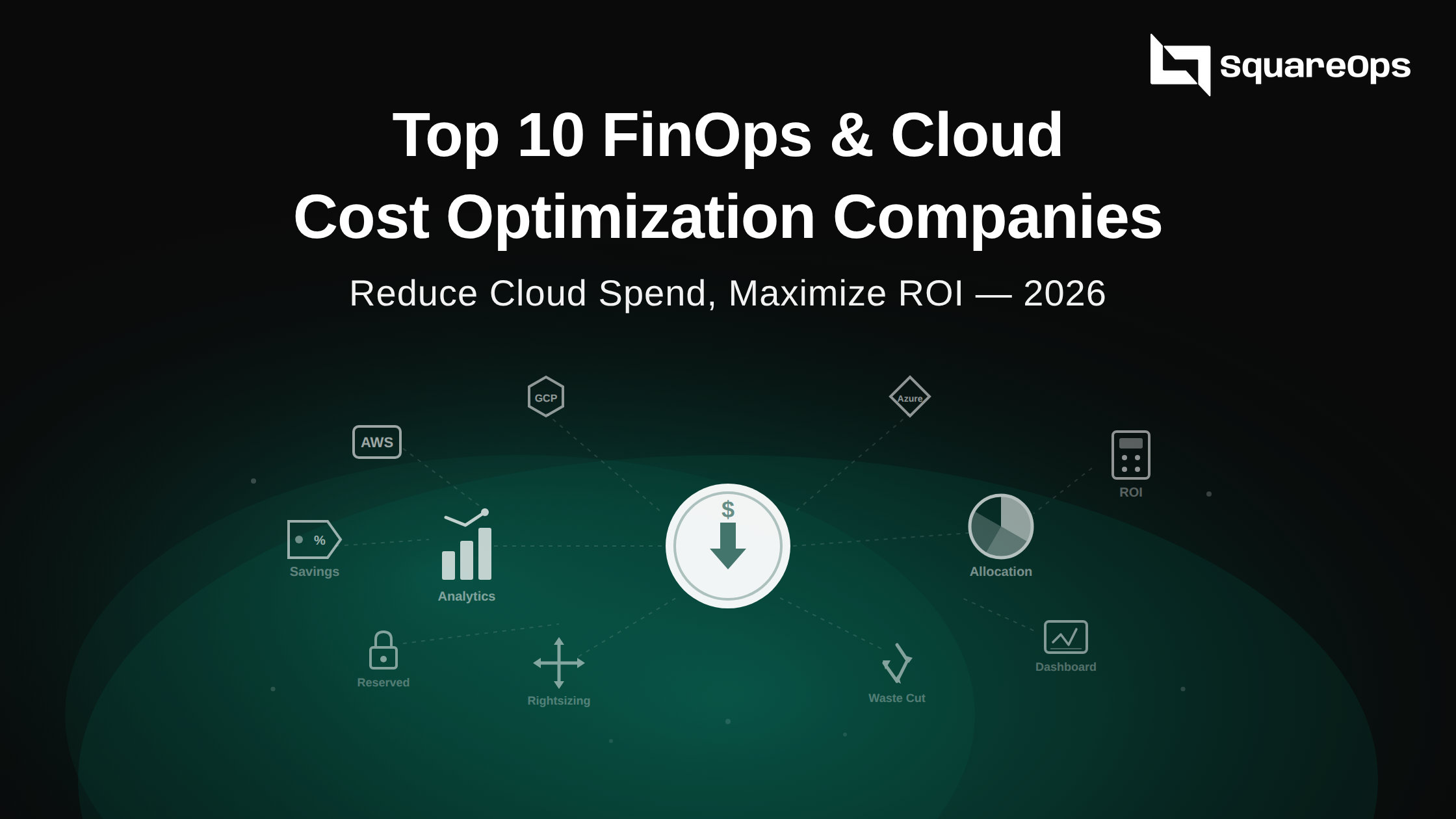
Key Efficiency KPIS for Enterprise Cloud Assets
IT governance is an official framework that directs and controls how an organization's info technology resources are handled, so that IT activity supports and advances overall company objectives. It covers four interconnected areas:-planning, arranging, and directing making use of innovation resources -securing delicate personal and corporate data and conference regulative obligations - the everyday tasks the IT department performs to meet agreed objectives - the policies and controls that protect the integrity and security of IT systems According to IBM, effective IT governance is an essential component of overall organization strategy and business governance, typically forming part of a wider Governance, Threat , and Compliance (GRC)policy. Efficient IT governance creates a direct link between technology investment and measurable business results. When governance is missing or poorly created, IT departments operate in seclusion, replicating effort, building up shadow IT, and developing compliance spaces. When governance is strong, IT decisions are made by the best people at the best level, resources are directed towards strategic priorities, and threat is managed proactively. For organizations undergoing digital improvement, governance is what avoids technology modification from surpassing the organization's capability to take in and gain from it. Lemon Learning's IT application support solutions are developed to help teams embed governance procedures into everyday workflows so adoption equals modification. Implementing reliable IT governance and IT management follows a repeatable process. Engage senior IT managers, business unit leaders, compliance officers, and key partners. Assign clear responsibility for each governance domain. Document escalation courses so that argumentsare resolved at the right level rather than defaulting upward or stalling totally. Refer to the common IT governance errors organizations make at this stage to avoid repeating them. The option depends upon size, industry, regulatory environment, and maturity. The most commonly adopted options are compared in the table below. Structure Primary focus Best fit for IT governance and management, threat control, audit readiness Large enterprises, managed industries IT service management lined up to organization needs Organizations with a fully grown IT service function International standards for IT service management and corporate IT governance Organizations seeking licensed, globally recognized governance CMMI(Capability Maturity Model Combination)Process enhancement rated on a scale of 1 to 5 Organizations benchmarking and improving development or delivery ability COSO (Committee of Sponsoring Organizations of the Treadway Commission)Internal control and business threat management Organizations focusing on monetary controls and scams deterrence CIS( Center for Internet Security)Controls Cybersecurity and infrastructure resilience Organizations reinforcing technical security posture Numerous companies integrate structures. Explore the important security certifications that complement these governance frameworks. An IT governance plan just ends up being genuine when it is documented, prioritized, and shared. The roadmap should specify: Short, medium, and long-term IT governance milestones Resource requirements and budget allowance Specific IT projects connected to organization goals Interaction touchpoints for all stakeholders Training and capability-building activities for IT and business staff Strategic alignment is the foundation of this step. Selecting the right mode for your company forms the whole roadmap. Communication is not a one-time event. All stakeholders- from the board and senior management to IT personnel and end users-require to comprehend the governance strategy, their role in it, and how success will be measured. Governance that is not measured does not enhance. Dashboard metrics usually cover: IT system efficiency and availability IT resource utilization and cost effectiveness Risk incidents and their resolution times Positioning in between IT project outcomes and company objectives Compliance audit results Official external assessment by a recognized standards body can include reliability and surface area blind spots that internal evaluations miss.

Latest Posts
Establishing Scalable Cost Governance
Improving Cloud Governance for Budgetary Efficiency
Improving Infrastructure Asset Performance and ROI