All Categories
Featured
Table of Contents
IT governance structures assist align IT properties with company goals and support effective decision-making. Secret goals of an IT governance structure consist of strategic alignment, value delivery, threat management, resource management, and efficiency measurement. Common structures include COBIT, ITIL, COSO, CMMI, and FAIR, each dealing with different aspects of IT governance. Carrying out an IT governance framework provides benefits such as improved stakeholder trust, cost savings, and improved performance visibility.
At Waydev, we understand that things are quite complex when it concerns IT Governance planning in a company. Linking IT and corporate structures while ensuring that both are part of an integrated technique and pursue the very same objective company success is not a simple job. To help you serve as an important part of Business Governance and deploy the IT governance structures at its best, we will walk you through the concept, its goals and approaches, and its benefits and offer you suggestions and tricks on releasing it successfully.
Check out further to discover how to monitor KPIs and budget plans to make the work for you. There are a few IT Governance meanings out there, but the most basic method to explain the process is to specify it as a pillar of business Governance. This set of policies enables Engineering executives to deploy efficient decision-making processes that ensure IT possessions supply top worth to the company and its stakeholders.
Optimizing Infrastructure Expenditures in 2026
On a big scale, the IT governance framework is a part of the overall enterprise governance. In this context, carrying out well, ensuring operational performance, and sound resource management are mandatory.
Great IT governance practices make sure the worth propositions are constant and that IT efforts are in line with the enterprise's overall operations. This is, perhaps, the core goal of IT governance. This IT Governance requirement needs a transparent approach.
Engineering Managers can identify how bug fixes and concerns effect roadmap and sofware delivery. A well established IT gouvernance enables Engineering Supervisors to determine their groups' software delivery velocity and throughput, produce reports with actionable insights and recognize enhancement chances. In doing so, they asses software application development efficiency and line up shipment velocity with quality and service needs.
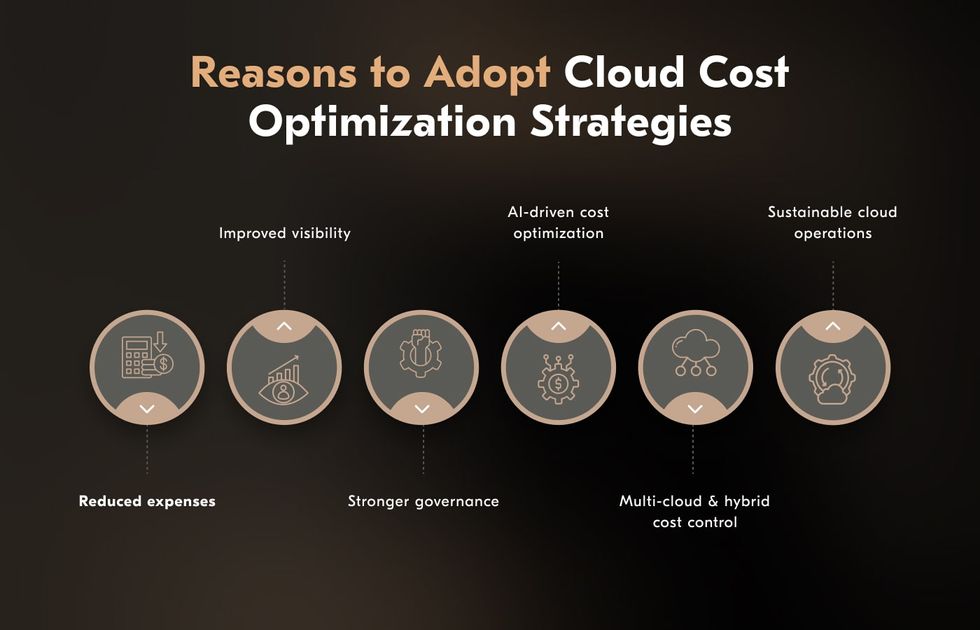
Attaining Governance Efficiency in Multi-Cloud Environments
They're aggregated from your CI/CD tools. The need to facilitate better IT Governance has actually resulted in the development and adoption of particular frameworks, such as Control Objectives for Info and associated Technology (COBIT), Information Innovation Facilities Library (ITIL), and the Capability Maturity Model Integration (CMMI), COSO framework, and the Element Analysis of Details Danger (FAIR).
Why Manual Governance Is Failing the Modern Australian EnterpriseIt makes it possible for companies to decrease costs, develop and deploy privacy standards and help supervisors organize and monitor tech processes. The detailed IT governance framework structure references thirty-seven IT processes, focusing on inputs, outputs, goals, and efficiency metrics. To keep up with the tech world's everchanging requirements and obstacles, COBIT 2019 is based on 6 core concepts: Offering stakeholder worth through resource balance and actionable methods.

Governance and management aren't constantly associated. Governance needs to always be tailored to the organization's requirements and capacity.
Why Manual Governance Is Failing the Modern Australian EnterpriseThis worldwide acknowledged incorporated structure provides IT Governance examples for finest practices, concentrating on utilizing IT to drive organization development, growth, and change. ITIL 4, the latest version available, addresses present challenges while likewise integrating newer SDLC processes, like Agile and DevOps, and cloud innovations. The updated approach makes it possible for CIOs to examine IT Governance's influence on the organization, enhance operational processes, break down silos by promoting collaboration and co-creation, developing trust among stakeholders.

Latest Posts
Establishing Scalable Cost Governance
Improving Cloud Governance for Budgetary Efficiency
Improving Infrastructure Asset Performance and ROI